
The journal
Do you drop the feed dogs when using a walking foot? Clear answer and setup
A direct answer to whether you drop the feed dogs with a walking foot, with practical setup steps, a worked example and quick fixes.
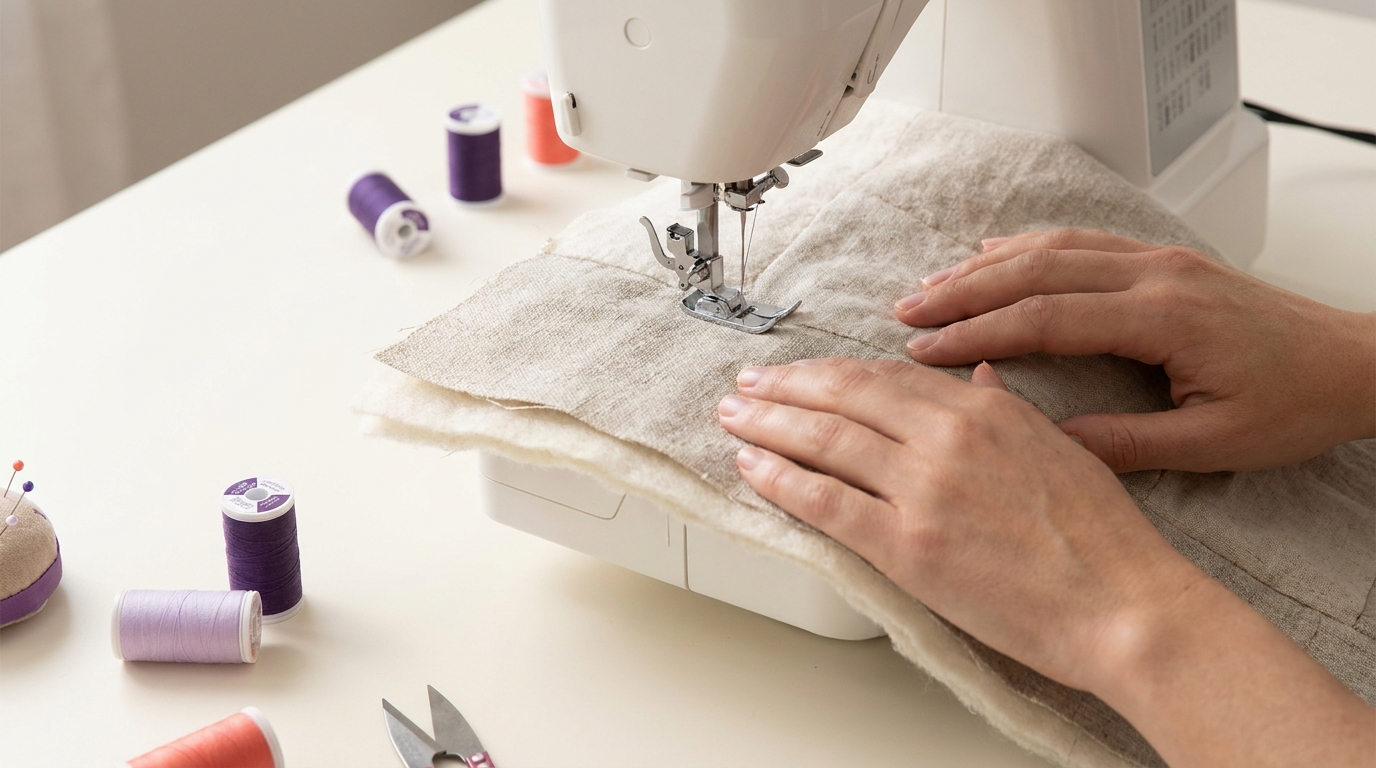
No. Keep the feed dogs up when you use a walking foot. A walking foot adds upper feeding that works with your machine’s feed dogs underneath to move layers together evenly, which is the whole point of using it for quilts and other multi-layer projects (Brother SA188 walking foot; National Quilters Circle: walking foot).
Why the feed dogs stay up with a walking foot
Walking feet include their own moving upper teeth that advance the top layer in step with the lower feed dogs. With both engaged, layers feed at the same rate, reducing shifting and puckering on straight-line quilting and other layered seams (Brother SA188 walking foot; National Quilters Circle: walking foot).
When you would drop the feed dogs instead
Feed dogs are typically dropped for free-motion work with a darning or free-motion foot, not with a walking foot. A walking foot is designed for guided forward feeding, not for moving fabric freely in any direction (Madam Sew walking foot guide). Note that some machines don’t allow lowering feed dogs at all and provide a darning plate to cover them when needed (Brother help: lowering feed dogs).
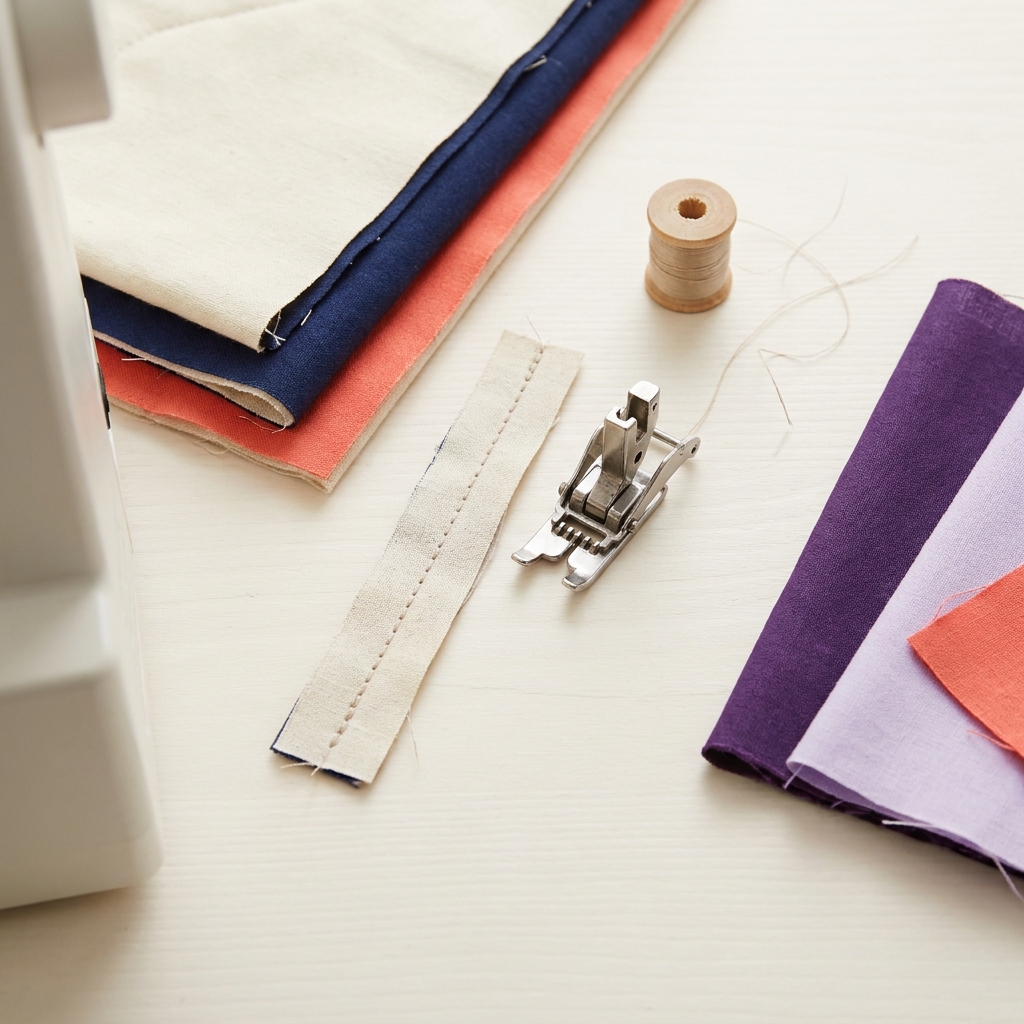
Quick setup for straight-line quilting with a walking foot
- Power off the machine. Raise the needle and presser foot.
- Remove the presser-foot holder if required, then mount the compatible foot using the exact machine and foot instructions. Many attachments have a lever or fork positioned at the needle clamp; its required position and fastener must be checked for that model (Pin Cut Sew: install a walking foot).
- Leave feed dogs up. Select a straight stitch.
- Adjust presser-foot pressure if your manual calls for it with thick stacks. Choose a needle for your fabric and layers.
- Test on a scrap sandwich before stitching the project.
Worked example: a test row on a quilt sandwich
Baste a small cotton-batting-cotton sandwich. Attach the walking foot according to its instructions, keep the feed dogs raised, and test a suitable straight stitch on the sandwich. A length around 2.8-3.0 mm is an illustrative starting point for this sample, not a setting for every fabric or machine. Check the underside for tucks and the top for consistent stitch length. If layers stayed aligned, proceed to the project. If not, recheck attachment, foot pressure and needle choice, then test again (National Quilters Circle: walking foot).
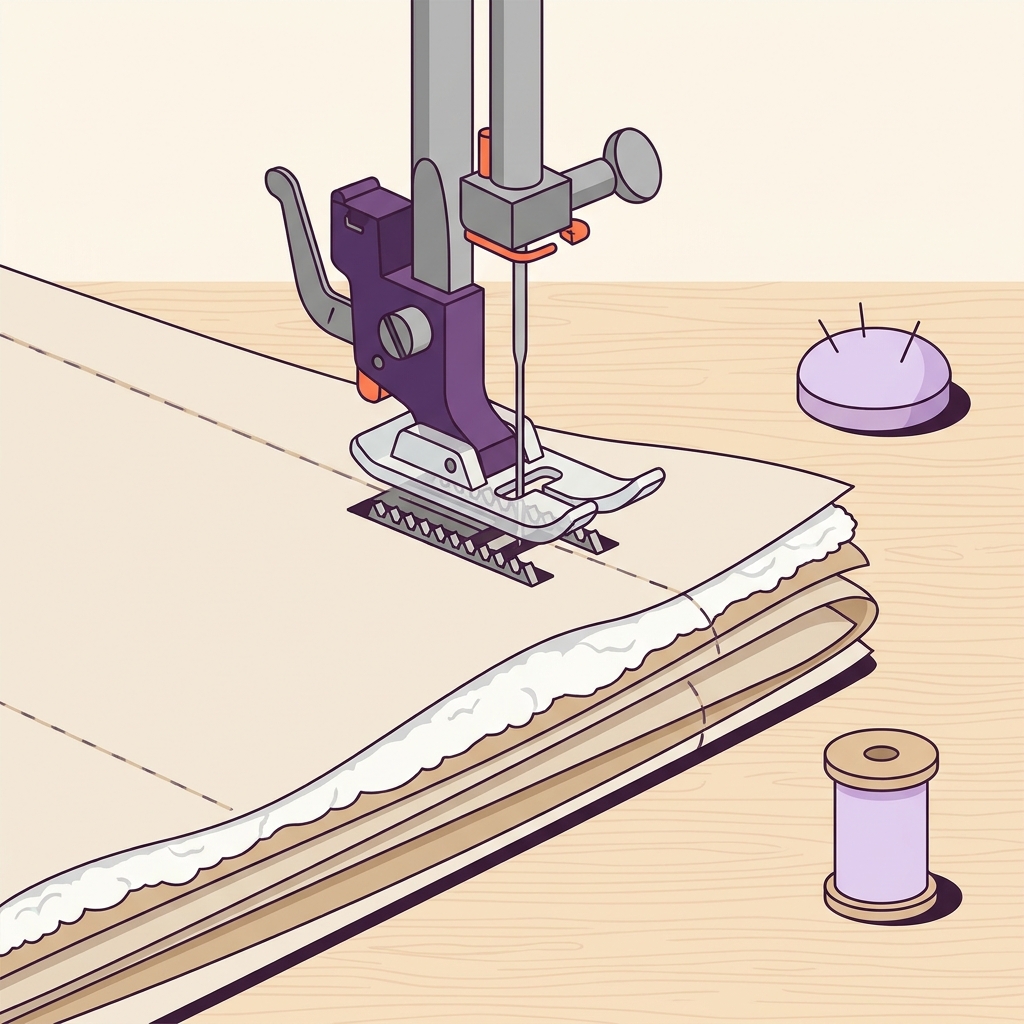
Common mistakes and quick fixes
If you drop the feed dogs by mistake
Expect uneven feeding or drag. The walking foot relies on the machine’s lower feed dogs to coordinate movement; re-engage them following the machine instructions and test the feeding again (National Quilters Circle: walking foot).
If layers still shift
- Slow down and let the foot do the feeding.
- Reinstall the foot, confirming the lever sits on the needle clamp screw (Pin Cut Sew: install a walking foot).
- Check needle type/size for your fabric and thickness and test again.
Built-in dual feed on some machines
Some models have integrated dual feed that pairs top and bottom feeding without an add-on foot. The concept is the same: coordinated feeding with feed dogs engaged. Follow your manual for setup (National Quilters Circle: walking foot).
Walking foot setup: pre-sew check
Related reading from Made in Steps
- What needle size should I use for different fabrics?
- Should I press seams open or to one side? A quick quilting guide

FAQ
Do integrated dual-feed systems change the feed-dog setting?
No. These systems coordinate top and bottom feeding like a walking foot does. You still sew with the feed dogs engaged unless your manual specifies otherwise (National Quilters Circle: walking foot).
Related guides
Sources and further reading
- SA188 Open Toe Walking Foot for 7mm Stitch Width Sewing Machines | Brother
- Why You Should Use a Walking Foot for Quilting | National Quilters Circle
- Why and When to Use a Walking Foot on Your Sewing Machine | Madam Sew
- How to lower the feed dogs | Brother Help
- How to Install and Sew with a Walking Foot — Pin Cut Sew Studio